Write inference the way graders score it.
AP® Statistics ebooks for students who want the 5: inference sheets, free-response writing guides and fully scored mock exams.
Start with the unit that's costing you points.
The five books students open first. Each one is a PDF that downloads the minute you pay, and works on any laptop, tablet or phone.
See all 10 ebooks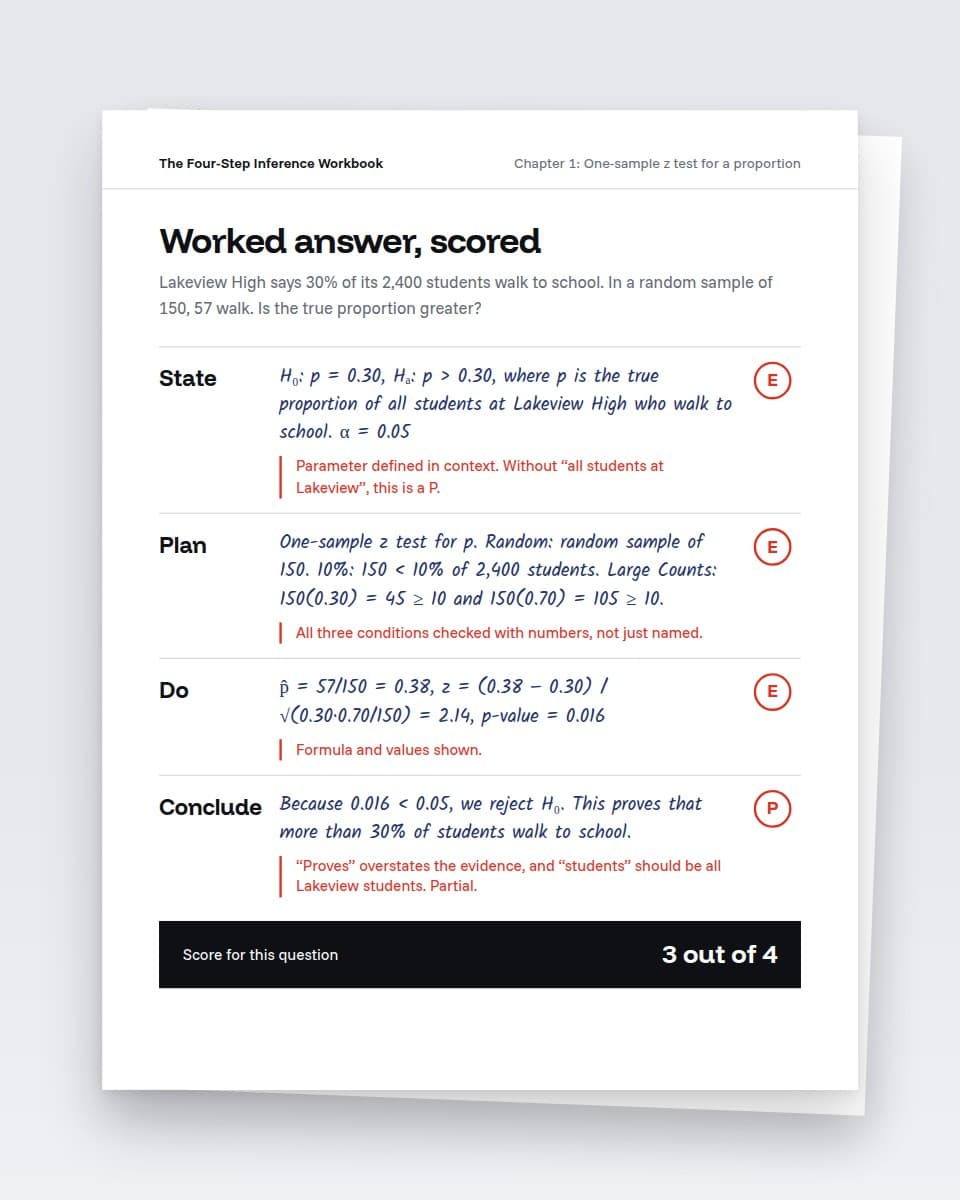
Watch a reader score an answer, one step at a time.
Every test in every Sigmalane book is solved with the same four steps, marked E, P or I as a reader would mark them in June.
Bags of trail mix are labelled 300 g. In a random sample of 36 bags, x̄ = 297.6 g and s = 6.0 g. Is the true mean less than 300 g?
State
EState
H₀: μ = 300 g, Hₐ: μ < 300 g, where μ is the true mean weight of all trail-mix bags filled at this factory. α = 0.05
Parameter named and defined in context.
Plan
EPlan
One-sample t test for μ. Random: random sample of 36 bags. 10%: 36 < 10% of all bags. Normal: n = 36 ≥ 30.
Procedure named, conditions checked, not just listed.
Do
EDo
t = (297.6 − 300) / (6.0 / √36) = −2.40, df = 35, p-value = 0.011
Work shown. A bare p-value would lose this.
Conclude
EConclude
Because 0.011 < 0.05, we reject H₀. There is convincing evidence that the true mean weight of all bags is less than 300 g.
Decision linked to α, conclusion about μ, in context.
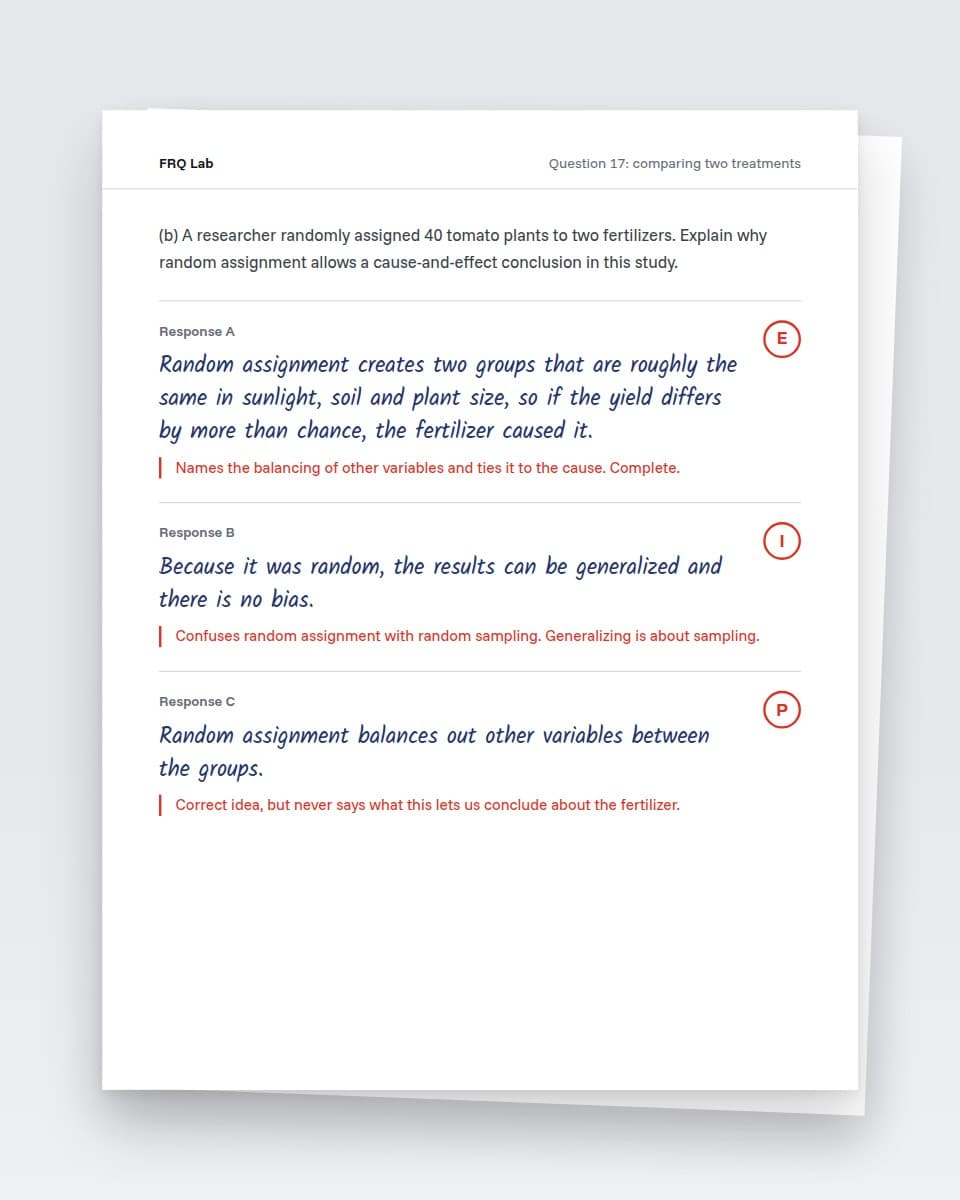
(b) A researcher randomly assigned 40 tomato plants to two fertilizers. Explain why random assignment allows a cause-and-effect conclusion in this study.
Response A
ERandom assignment creates two groups that are roughly the same in sunlight, soil and plant size, so if the yield differs by more than chance, the fertilizer caused it.
Names the balancing of other variables and ties it to the cause. Complete.
Response B
IBecause it was random, the results can be generalized and there is no bias.
Confuses random assignment with random sampling. Generalizing is about sampling.
Response C
PRandom assignment balances out other variables between the groups.
Correct idea, but never says what this lets us conclude about the fertilizer.
A reader can only score the words you put on the page.
A real page from FRQ Lab: one question, three student answers, and the reason each one scored E, P or I.
Open FRQ LabI scored free-response answers for six Junes. These books hold what I wish every student had read by March.
Claire Donnelly, former AP® Statistics teacher and exam reader, founder of Sigmalane
“I kept losing the conclusion point because I only wrote “reject H₀”. The Workbook made me write the context every time, and my practice FRQs went from 2s to 4s.”
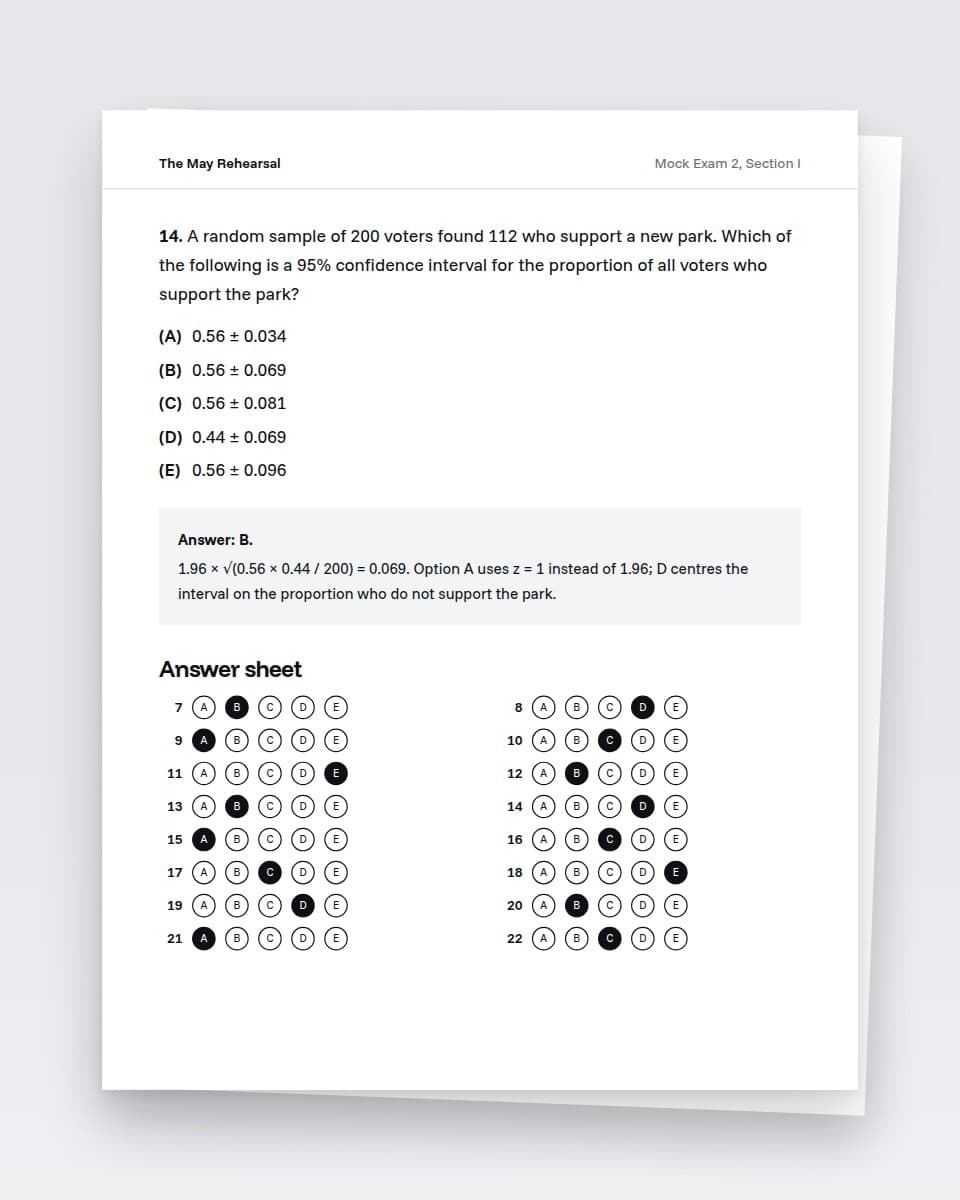
“The conversion sheet in The May Rehearsal told me I was a 3 in March. I knew exactly which two units to redo before May.”

Unit 4 starts with two dice. By Unit 9 you are writing about slopes. The method stays the same.
Every book, and the points it wins back.
Each price is paid once. You keep the PDF, and updated editions are free until the end of the May 2027 exams.
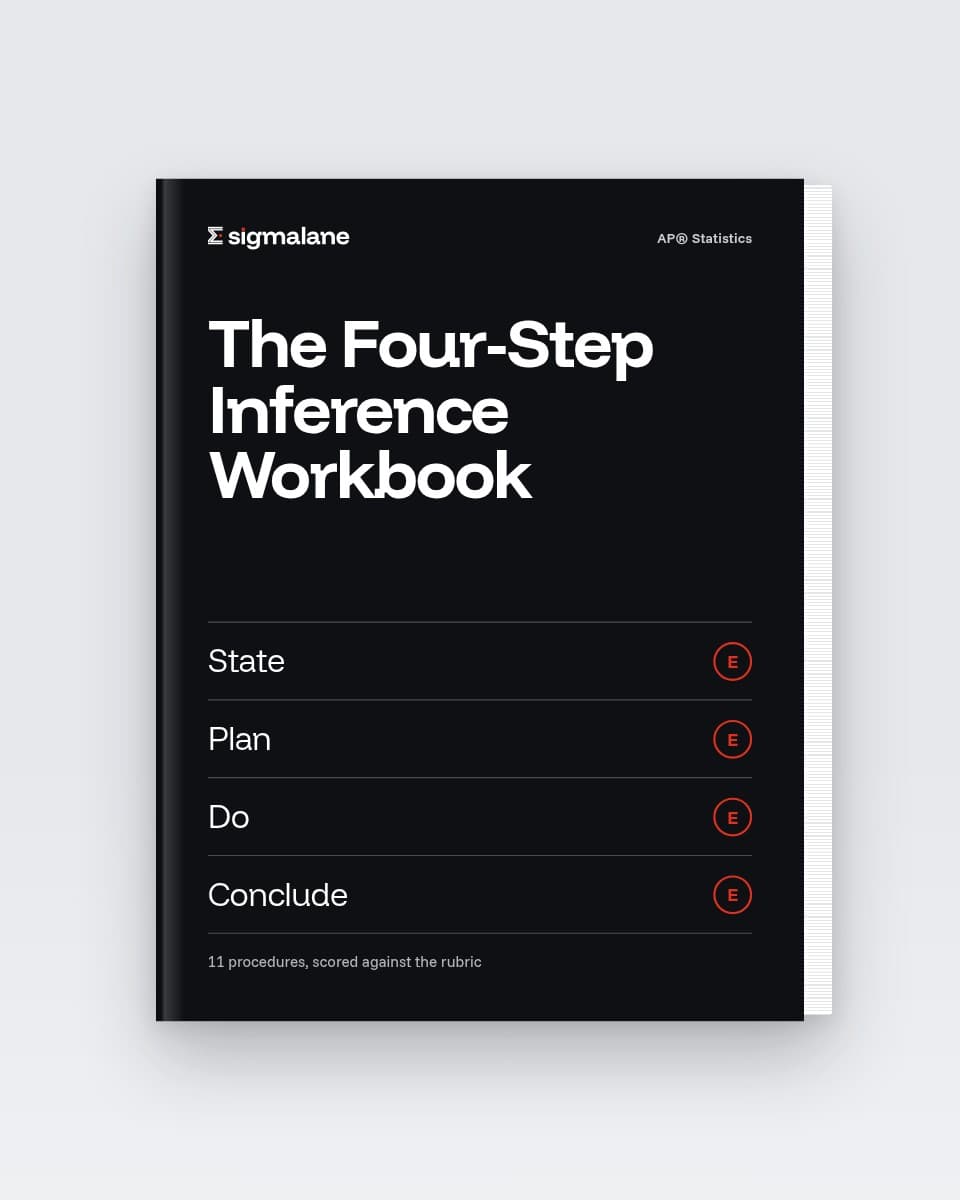 The Four-Step Inference Workbook168 pagesEvery inference procedure in the course, solved in four steps and scored like the real thing.€19.90
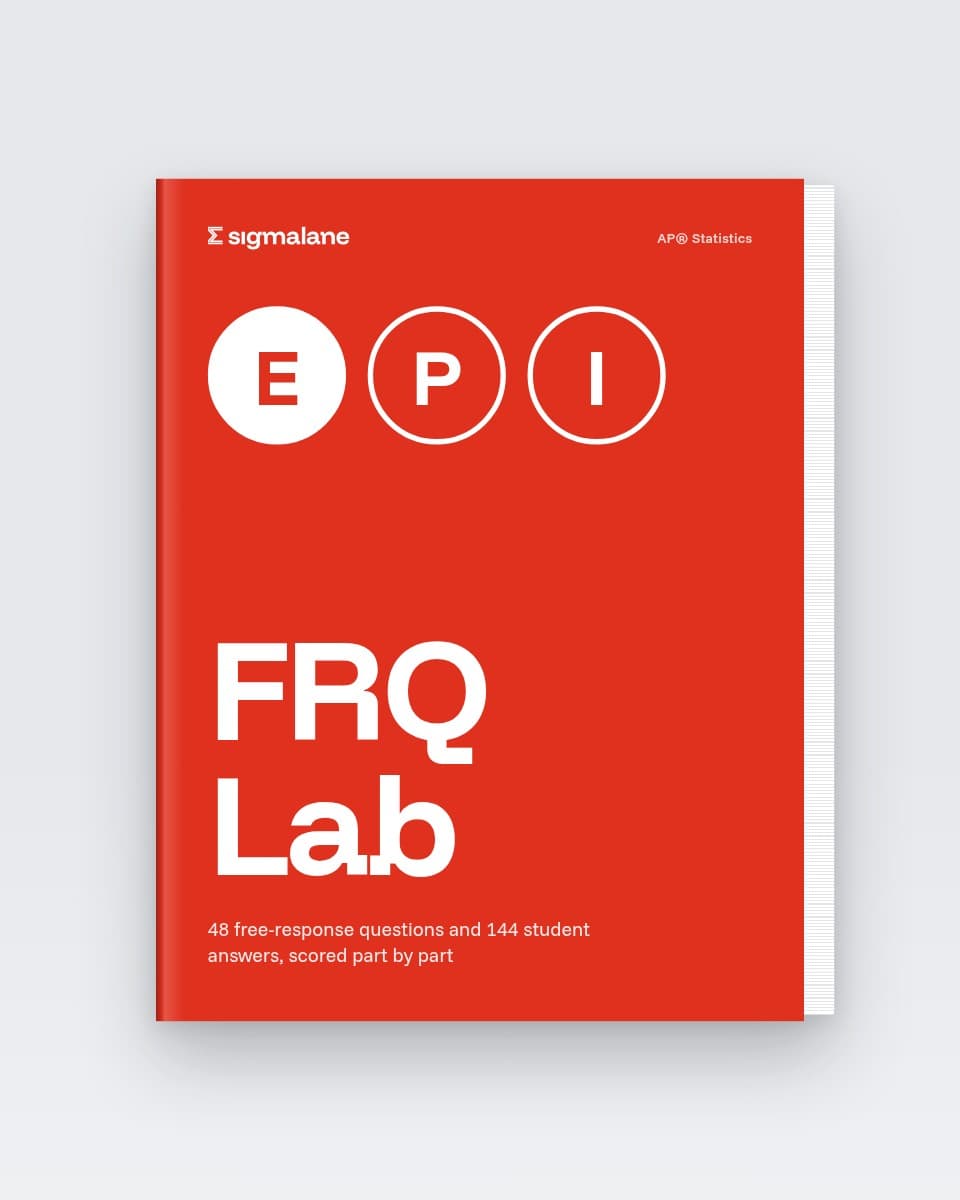 FRQ Lab212 pages48 original free-response questions, each with three scored student answers.€49.90
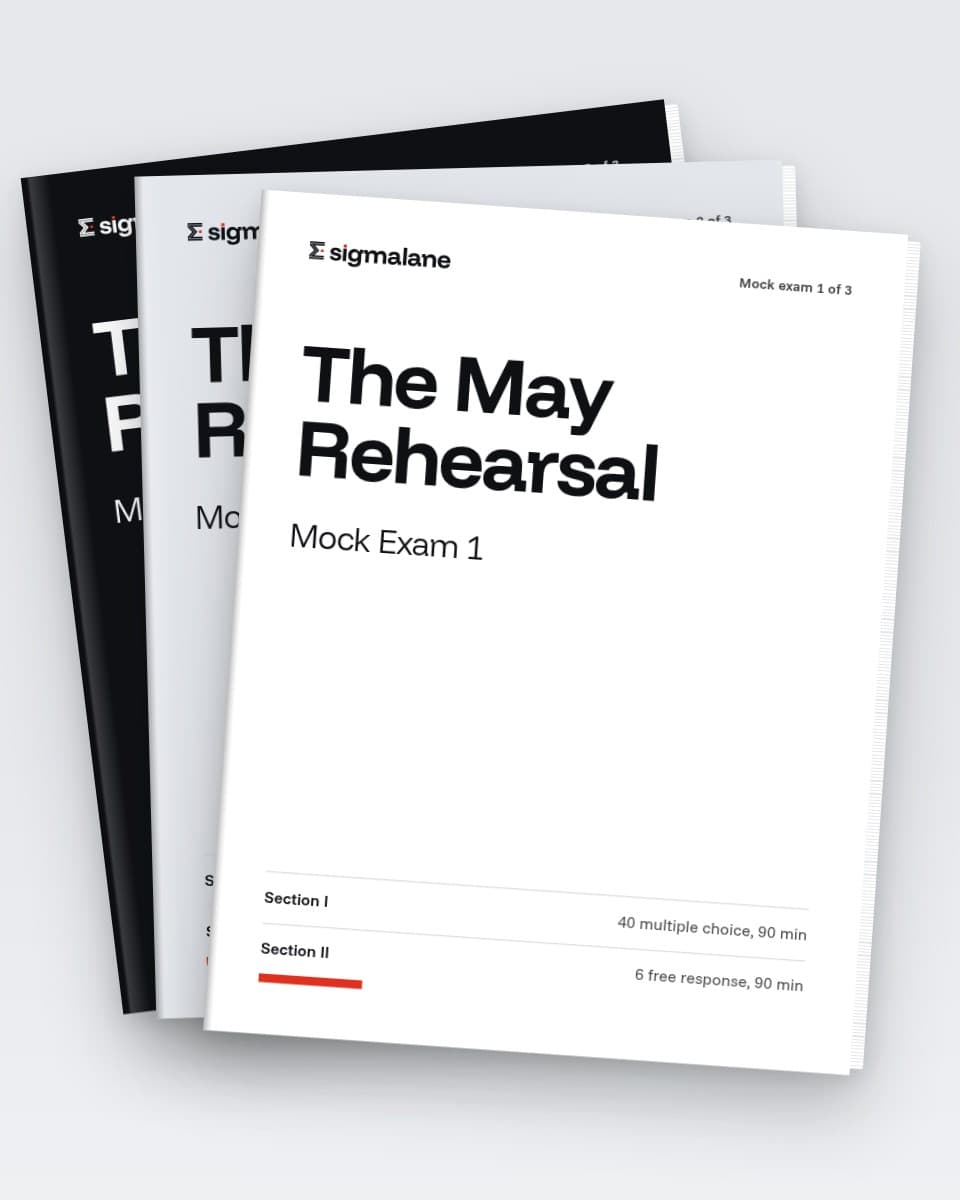 The May Rehearsal296 pagesThree full mock exams, timed, scored and converted to a 1 to 5 estimate.€99.90
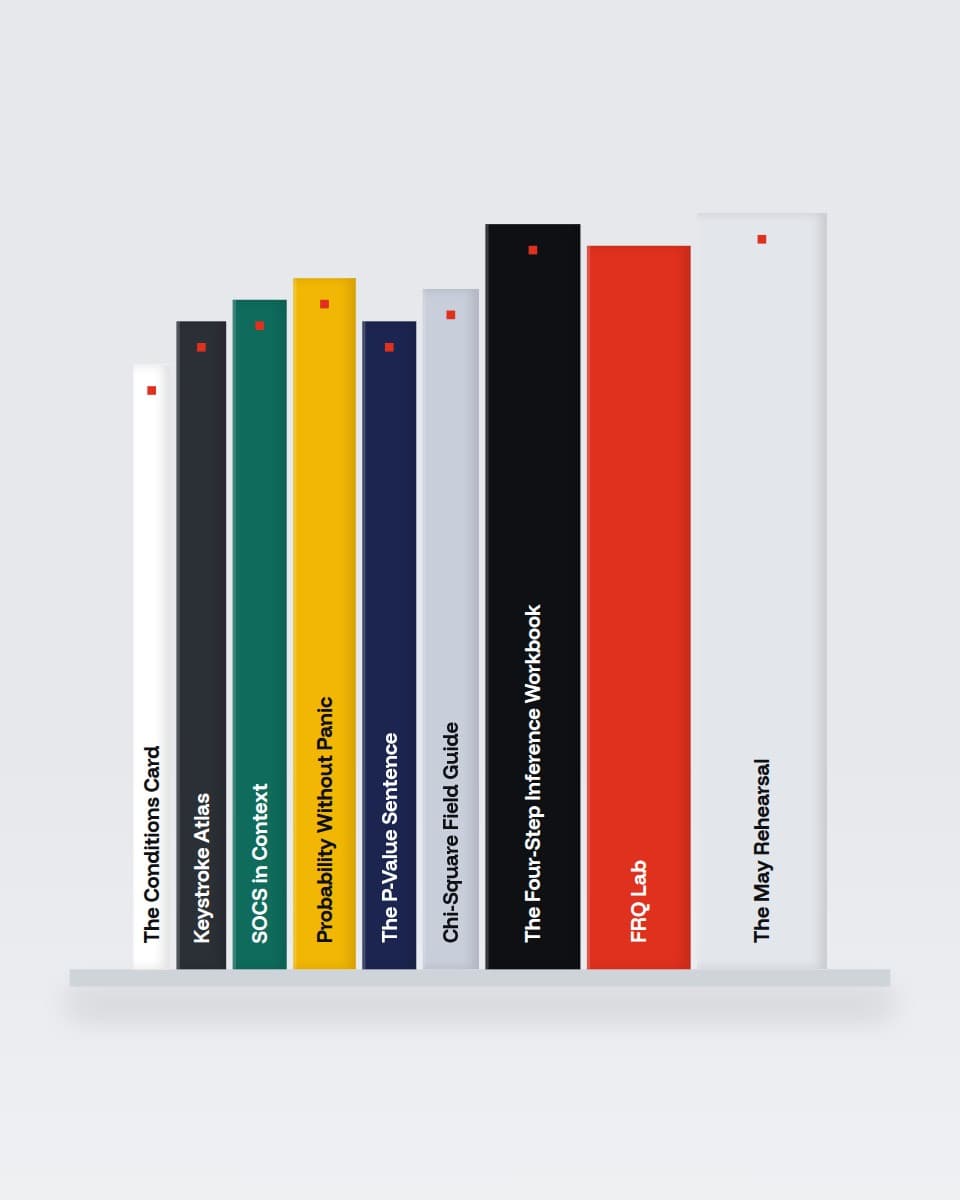 The Five Shelf878 pagesThe whole Sigmalane library, plus the 12-week plan that ties it together.€199.90
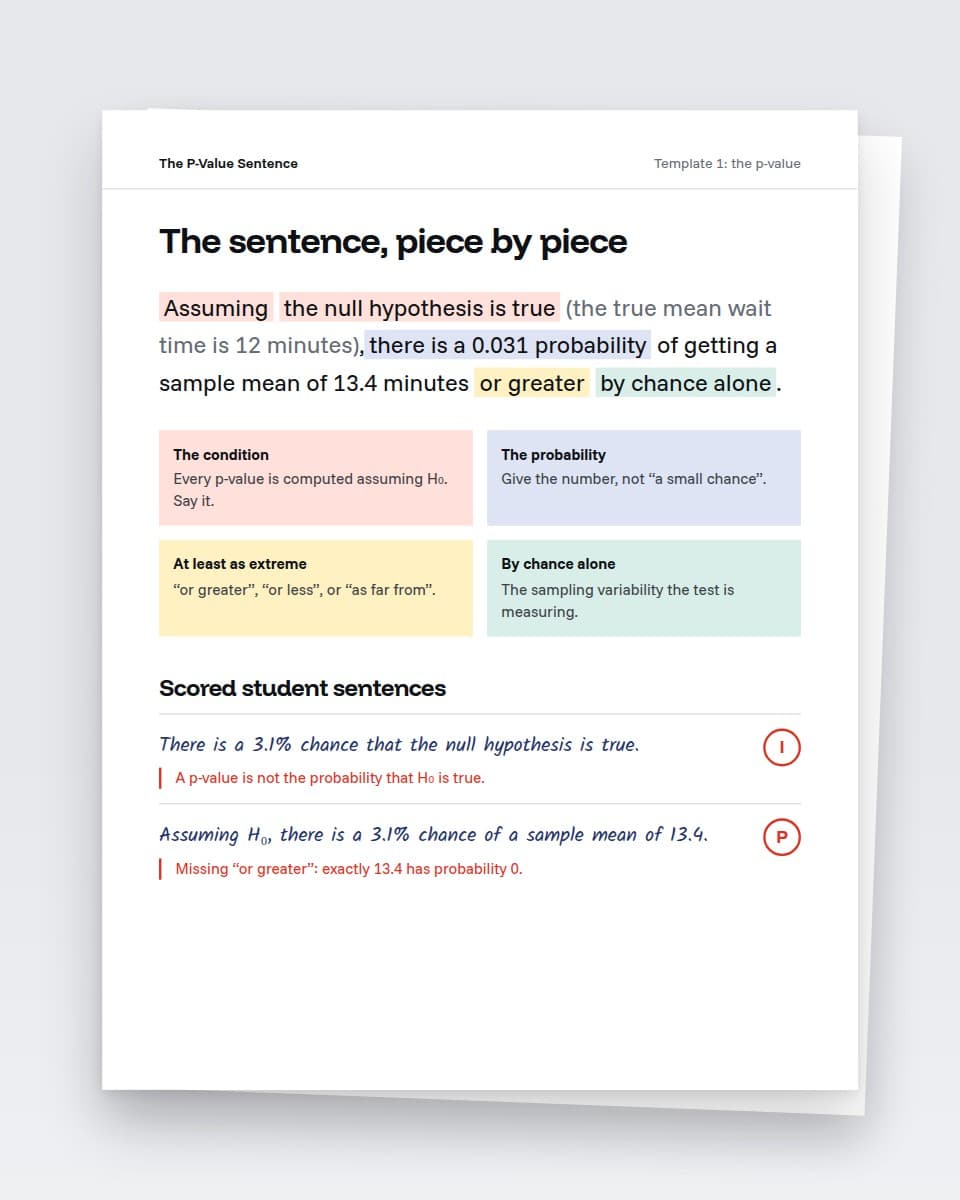
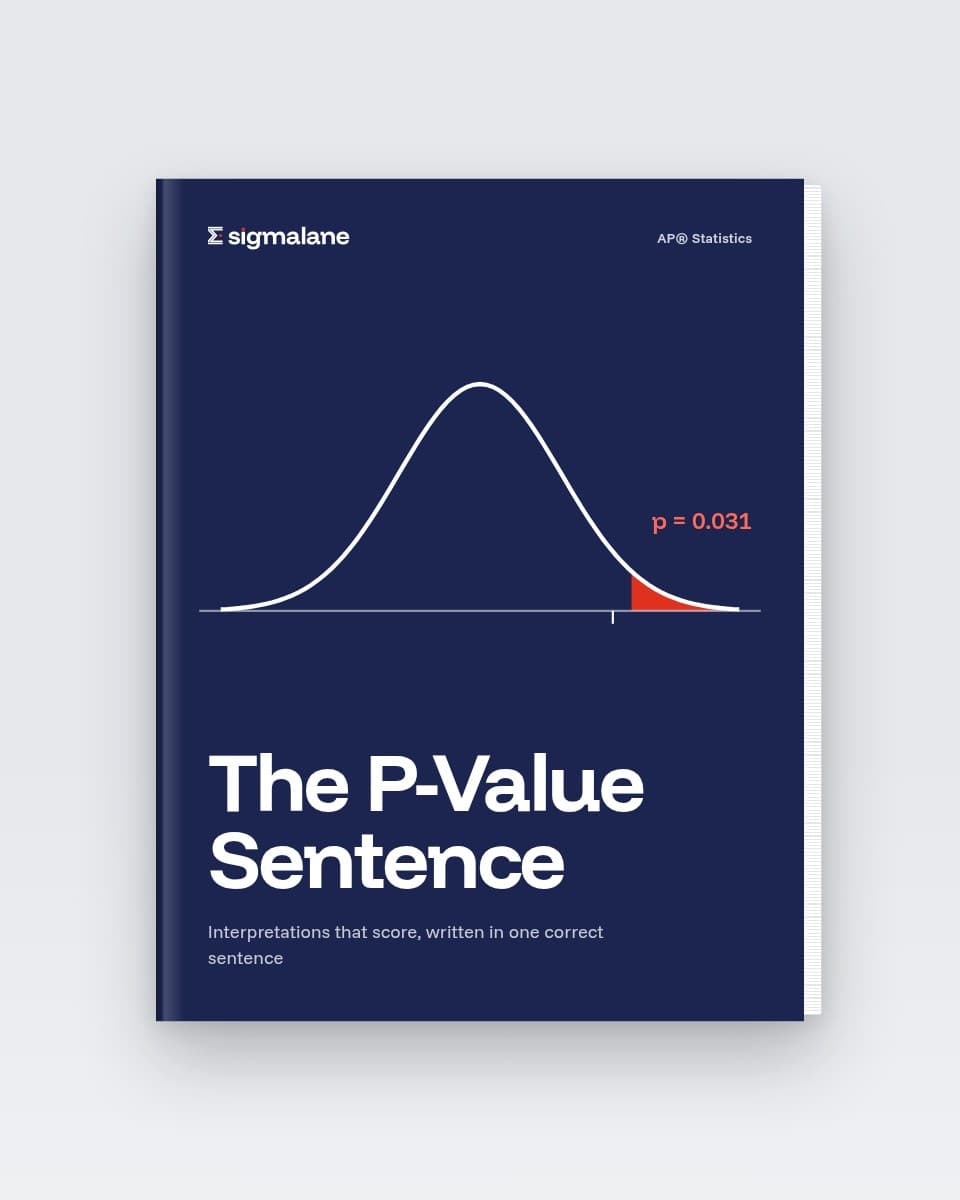 The P-Value Sentence40 pagesInterpret p-values, confidence levels and errors in one correct sentence.€8.90
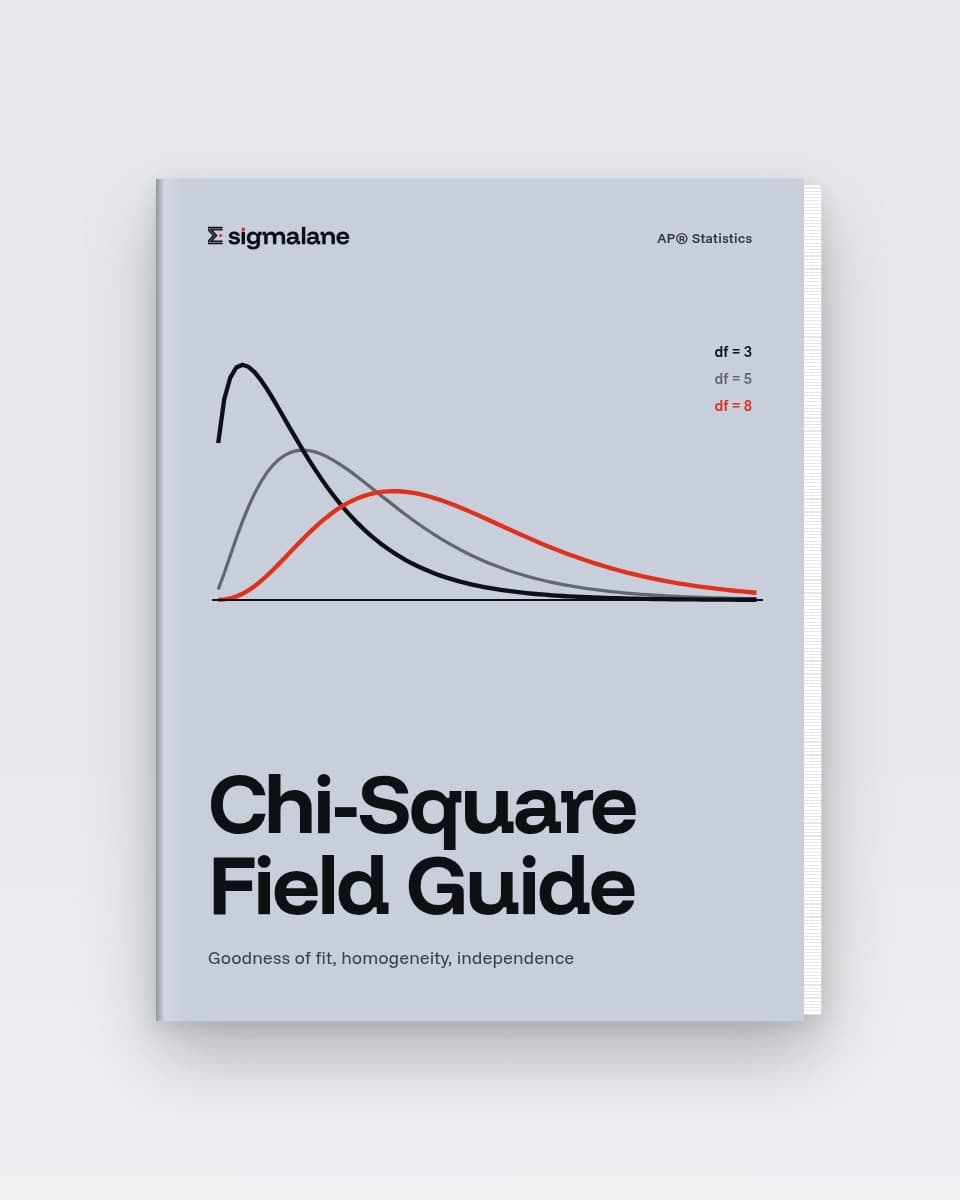 Chi-Square Field Guide44 pagesGoodness of fit, homogeneity or independence: pick the right test, then write it.€9.90
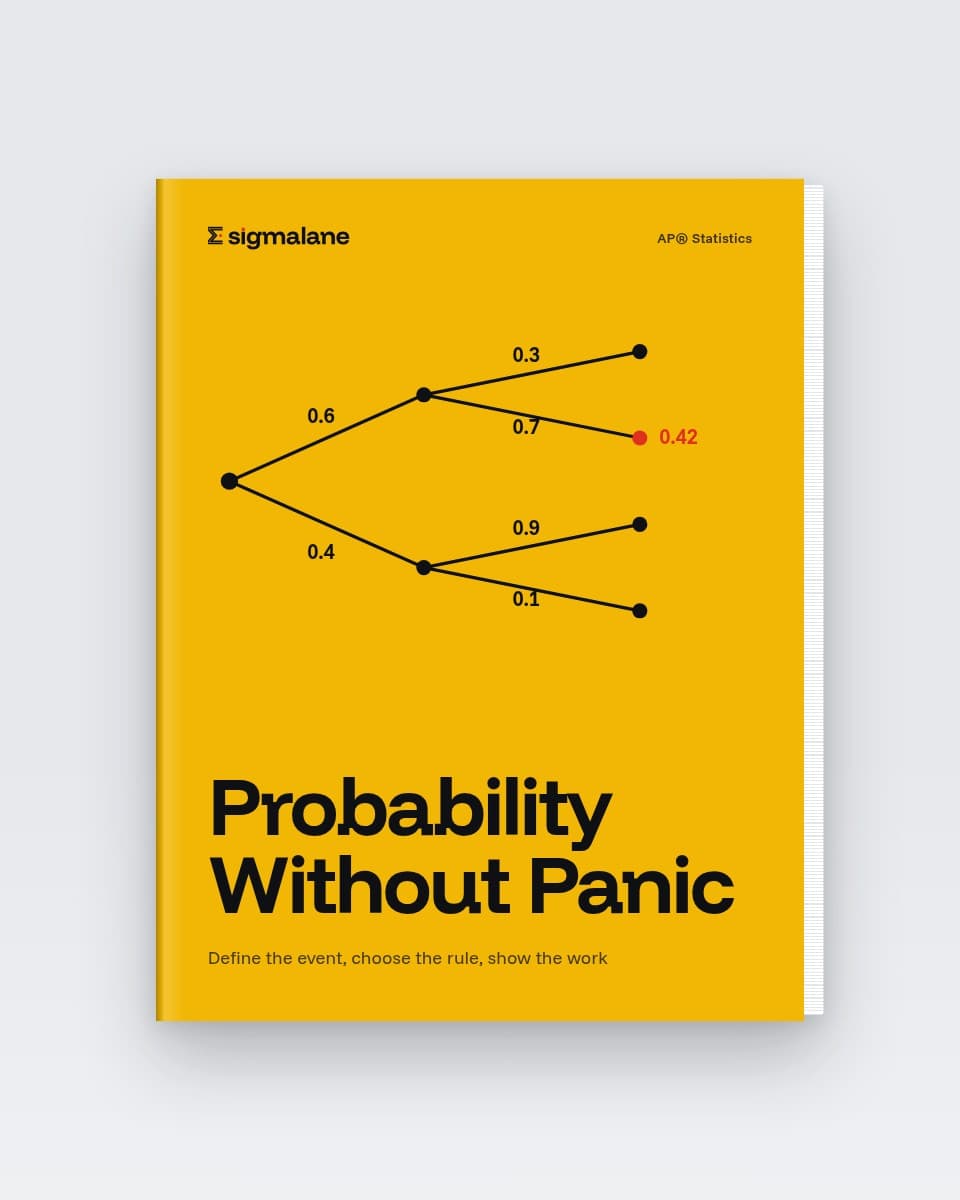 Probability Without Panic52 pagesUnit 4, from tree diagrams to binomial settings, in plain steps.€7.90
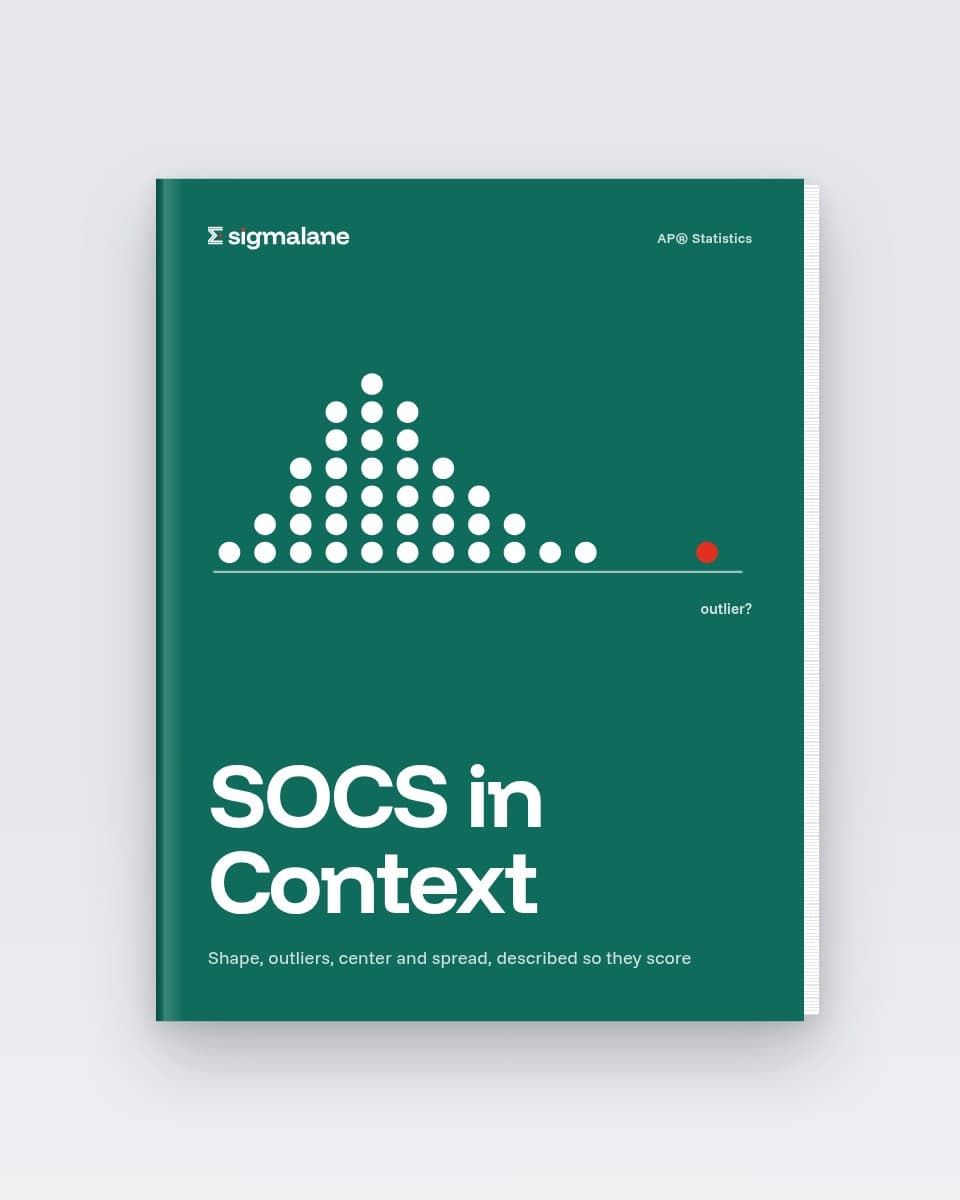 SOCS in Context36 pagesDescribe and compare distributions the way the rubric wants.€6.90
 Keystroke Atlas28 pagesGraphing calculator keystrokes for every test and interval, and what to write down.€5.90
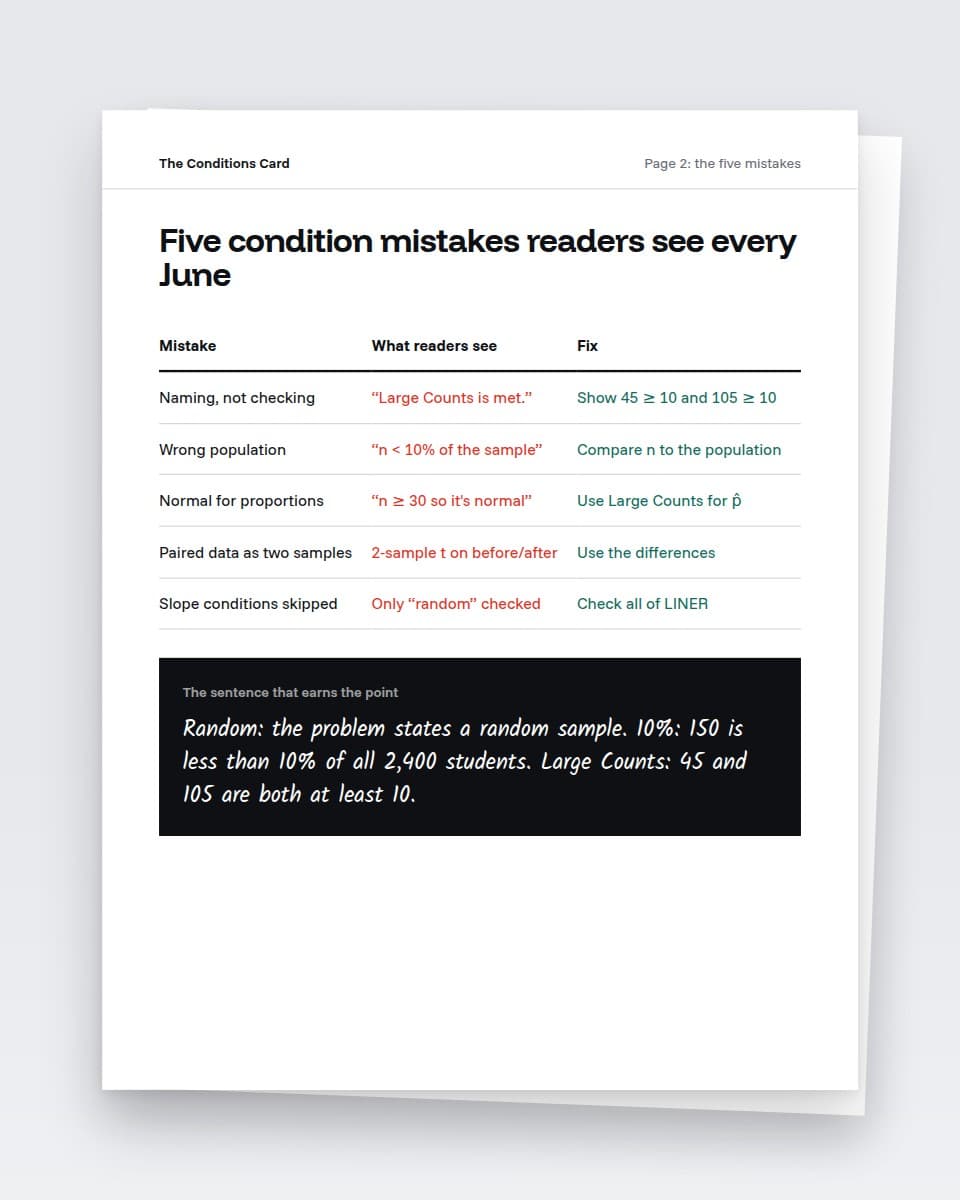
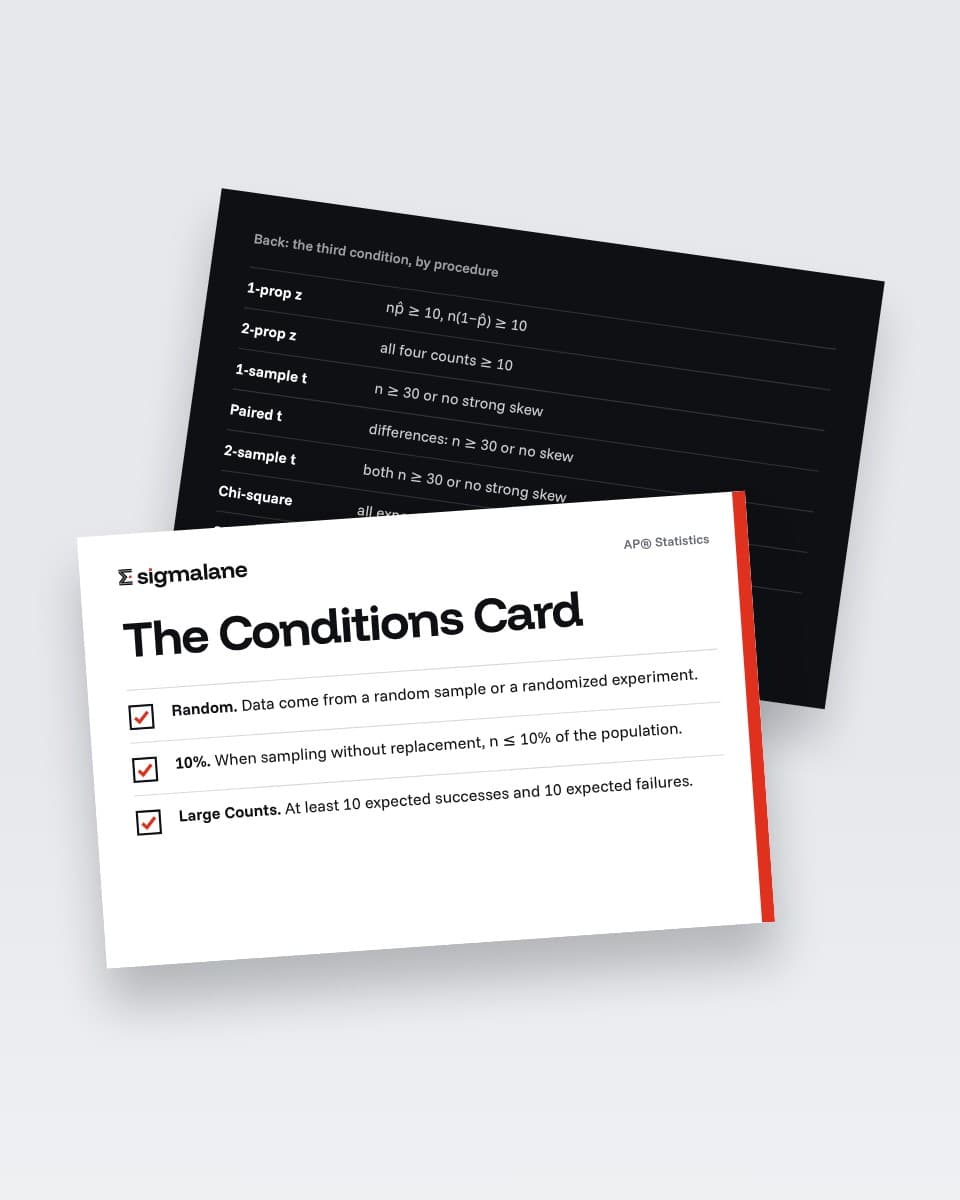 The Conditions Card2 pagesEvery inference condition, checked the way readers want, on one double-sided card.€4.90